Now Is The Time To Level Up Your Healthcare Workplace Safety Practices

S. Cory White is the Executive Vice President and Chief Commercial Officer at Stericycle.
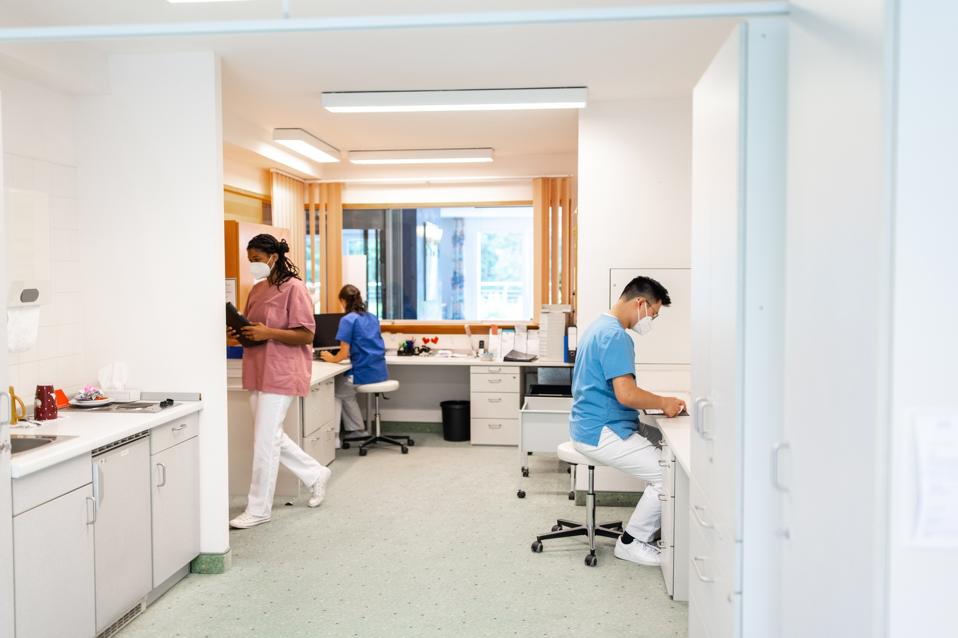
The Covid-19 pandemic shed light on the stress that healthcare workers face—stress made worse by increasing demands for frontline staff.
Our company’s third annual Healthcare Workplace Safety Trend Report, which surveyed 400 healthcare professionals (HCPs) and 100 healthcare administrators, found that almost half of HCPs said their stress levels at work were worse than the previous year, and a majority of them reported experiencing negative feelings daily. These feelings are impacting the industry attrition rate. A survey by the American Medical Association showed that 40% of the physicians asked said they have moderate interest in leaving the industry. This is troublesome, as it was found that more than 13,000 additional primary care providers, 10,000 dental care providers and 6,000 mental health providers are needed to meet U.S. demand. The healthcare industry’s talent gap is concerning, impacting financial costs, productivity and workplace culture. And the need for HCPs is projected to grow at an unprecedented rate of 29% from 2023 to 2033. In an industry potentially short of thousands of workers, action must be taken.
We need to keep current HCPs fulfilled while also attracting new staff. One way to do this is to ensure that HCPs experience a safer workplace both physically and mentally. With evidence indicating that high numbers of HCPs are reporting negative feelings when at work, healthcare organizations must take actionable steps to protect, retain and grow their staff.
As the chief commercial officer at Stericycle, I oversee our team of experts who work with HCPs to understand their needs and provide the best options to ensure effective and compliant medical waste management, which directly impacts the health and safety of patients, care providers and the community. Based on this experience, I’d like to share some potential solutions any healthcare organization can implement to help achieve employee satisfaction with a concentration on safety.
Putting Your Focus On Support
Issues of understaffing, patient volume, workload and administrative burdens are top reasons why HCPs are feeling burnt out, exhausted or distracted at work. This would be overwhelming in any industry, but in the healthcare industry, the intense work environment heightens feelings of stress and anxiety.
Taking a step back from the problem can often give perspective into new solutions, such as enhancing support. Find ways to lighten HCPs’ extensive to-do lists and allow them to spend more time focusing on patient care. One solution is filling gaps with temporary healthcare workers, though it requires proper training and resources—having adequate staff is important for HCPs to feel safe at work. Additionally, leveraging innovative technologies and actionable data to drive efficiency can lower workloads and stress.
By centralizing administrative tasks with online tools and platforms, HCPs can save potential time and focus on providing patient care. For example, after working with numerous healthcare providers, my team has seen that providing a customer portal that provides easy access to on-demand HIPAA and OSHA compliance training programs as well as managing medical waste pickup schedules and invoice payments makes a notable difference in minimizing stress and ensuring consistency in these tasks.
Adequate Training Is Essential
Our survey uncovered that more than one in three (37%) HCPs have experienced an injury or have witnessed a colleague get injured at work. More than half (63%) said they are concerned about future injuries and estimate that their organizations lose more than $350 million each year to workplace injuries. Providing employees with proper training and an adequate number of HCPs to meet demand is one effective way healthcare leaders can proactively protect their staff.
Another area where training is critical for healthcare workplace safety is proper medical waste management. Improper disposal can put HCPs’ physical safety at risk, which is why it’s important to work with trusted, qualified partners who can provide comprehensive solutions and training to help keep staff safe and compliant with industry regulations.
Properly segregating medical waste is crucial to protect HCPs in the workplace—imagine the harm a misplaced needle could do to HCPs or patients. Proper segregation also allows for trusted medical waste management partners to properly treat and dispose of different forms of contaminated materials. Whether it’s used sharps, unused or expired prescriptions, or other waste derived from medical treatment, each must be handled according to state regulations. Employers should provide clarity in policies and standardized processes, as well as provide training upon orientation as well as annual refreshers, to ensure all are confident in how to dispose of the waste generated every day.
In summary, regular training is a critical component in enhancing workplace safety. Not only do HCPs require resources and tools to better deal with understaffing, but they also need regular training around managing difficult patients and properly disposing of medical and pharmaceutical waste.
Workplace Safety Is A Work In Progress
We know that the right education and resources can contribute to a safer work environment, but affecting real change takes time and effort. Each organization must craft a unique approach to the risks and stressors inherent in its workplace.
By identifying and addressing the gaps in current practices supporting the mental and physical safety of staff, healthcare organizations can change their work culture. This not only benefits the bottom line by increasing employee retention and productivity but also creates a better environment for those who dedicate their time to caring for others. Now is the time to make workplace safety a priority.
Forbes Business Development Council is an invitation-only community for sales and biz dev executives. Do I qualify?
link