Medical acupuncture in healthcare: nurse perspectives and implementation
This article explores how nurses trained in Western medical acupuncture are integrating the practice into symptom management in cancer and palliative care
Abstract
This article explores the integration of Western medical acupuncture into palliative and oncology nursing practice across Sussex. It highlights the benefits of acupuncture in alleviating the side-effects of cancer treatment, improving patient wellbeing and reducing medication dependency. The authors – four nurses experienced in chemotherapy and palliative care – share their insights from implementing acupuncture in various settings, including hospices and community services. Despite challenges, such as time constraints and administrative demands, they emphasise the value of acupuncture in providing holistic, low-cost symptom management. The article encourages further training and partnerships to expand acupuncture services, promoting their potential in enhancing patient care.
Citation: Darling J et al (2025) Medical acupuncture in healthcare: nurse perspectives and implementation. Nursing Times [online]; 121: 8.
Authors: Josephine Darling is nurse, acupuncturist and psychological therapist, University Hospitals Sussex NHS Foundation Trust; Caroline Clews is retired nurse specialist and acupuncturist; Wendy Walker is retired nurse specialist and acupuncturist; Anna Joseph is oncology nurse and acupuncturist, University Hospitals Sussex NHS Foundation Trust.
- This article has been double-blind peer reviewed
- Scroll down to read the article or download a print-friendly PDF here (if the PDF fails to fully download please try again using a different browser)
Introduction
We are four nurses working in chemotherapy and palliative care services across Sussex, with specialist interests in oncology and integrative approaches to symptom management. In this article, we share our insights and clinical experiences on the potential benefits of incorporating acupuncture to help alleviate the side-effects of cancer treatment and to support people living with cancer.
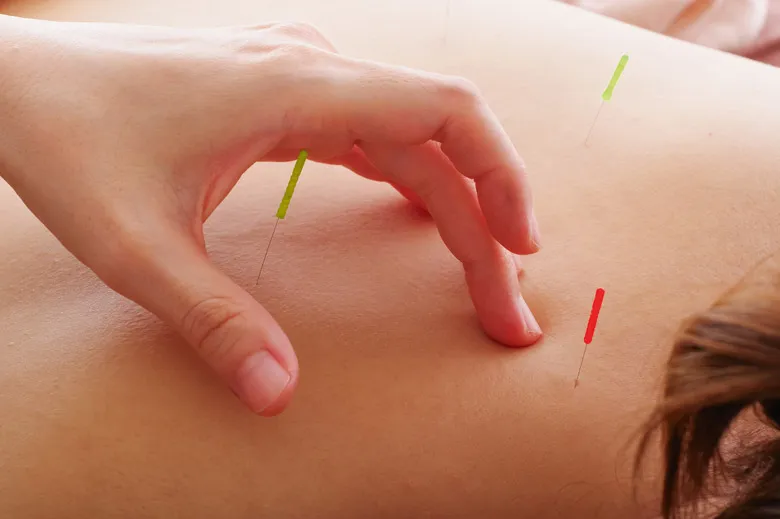
Western medical acupuncture (WMA) has been adapted from traditional Chinese acupuncture but is based on current understandings of anatomy, physiology and evidence-based medicine (Cummings, 2025). Despite ongoing scepticism among some Western clinicians about the scientific grounding of traditional Chinese medicine, WMA has gained wider acceptance, supported by research demonstrating its physiological effects. WMA is understood to work primarily through stimulation of the nervous system, which triggers the release of the body’s own pain-relieving chemicals (such as endorphins) and influences how pain signals are processed by the brain (White, 2018).
Training in WMA is available to health professionals, including nurses, through various accredited providers, such as the British Medical Acupuncture Society (BMAS). Courses typically involve a combination of online theoretical modules and face-to-face practical training in needling techniques to ensure safe and competent practice. Once the training has been completed, practitioners can begin incorporating WMA into their clinical work, as long as it aligns with their local policies.
We recommend obtaining the BMAS Certificate in Medical Acupuncture within 12 months of finishing the course. On achieving the award, BMAS considers the clinician competent to use WMA in their existing scope of professional practice.
We hope to inspire more nurses to consider training in acupuncture, adding a valuable, low-cost treatment method to their therapeutic toolkit that benefits both patient and staff wellbeing. By helping to reduce patient distress, research shows that such approaches may also lower the risk of burnout among healthcare staff (Kissane et al, 2017).
Using acupuncture in practice
Hospice and cancer care setting
Josie completed the BMAS foundation course in 2006 and has been integrating acupuncture into her nursing practice at a hospice and Macmillan Cancer Centre.
In her dual role as both nurse and acupuncturist, Josie can offer physical symptom relief, health promotion and emotional support, which contributes to holistic care. She administers acupuncture to ~14 patients per week, with treatments helping alleviate complex symptoms such as existential anxiety, fatigue and nausea.
It should be noted that, while acupuncture is generally safe, risk assessments are essential to avoid complications (such as infections in vulnerable patients) or rare, but serious, side-effects (such as pneumothorax when needling near the chest area) (Cummings, no date).
Josie’s patients have reported significant relief from various symptoms, including hot flushes, anxiety, pain and shortness of breath. Josie’s patients appreciate the relaxation they experience and the calm state that is induced by acupuncture, which Josie enhances with calming music and a comfortable environment. Carers of Josie’s patients have also found acupuncture beneficial for stress management.
Community-based Acupuncture Service
Anna co-founded the Community-based Acupuncture Service (CBAS), which was designed to support patients with cancer who have treatment-related symptoms that can often lead to a reduced quality of life and further dependency on pharmaceuticals. In collaboration with GP Carolyn Rubens, Anna offers acupuncture as a supplement to conventional treatments, helping patients to tolerate their treatment regimens better and improve their overall outcomes. Initially hindered by the limitations of space and time in a busy hospital setting, Anna and Carolyn partnered with a local Macmillan centre, which allowed them to establish a dedicated clinic.
With funding from Sussex Cancer Fund, a local cancer charity, Anna, Josie and Wendy work together to give patients free acupuncture sessions. Patients receive six weekly sessions, individually tailored to address their unique symptoms related to their cancer treatment or living with cancer. After their six individual sessions, patients are taught self-needling techniques based on Filshie et al’s (2016) protocol, which includes guidance on safe DIY needling and follow-up sessions to sustain symptom management.
For ongoing support, CBAS introduced monthly group acupuncture sessions. These groups of up to eight clients provide a supportive space for individuals to share experiences and symptom management strategies while allowing nurses to treat multiple clients at the same time, in one space. Multibed clinics are a low-cost, time-effective and sustainable way to make acupuncture accessible to more people who need it (Association of Community and Multibed Acupuncture Clinics, no date) and it is something on which CBAS would like to expand with more sessions.
Some statistics from CBAS’s (2023) service feedback surveys show that, after six weeks of sessions, 80% of patients reported improvement in general wellbeing, and 70% of those treated for hot flushes reported a reduction in symptoms.
Administrative support, initially handled solely by the acupuncturists, became critical as patient demand grew. Charity volunteers now handle bookings, cancellations and consent forms to make sure CBAS runs smoothly. Anna notes the importance of strong administrative support for maintaining an efficient service and stresses that, without it, the delivery of acupuncture in high-demand settings would be challenging.
Community nurse specialist role
With years of experience in district nursing, Wendy’s role as a clinical nurse specialist in community palliative care involves providing holistic symptom management addressing pain, nausea, breathlessness, anxiety, low mood and general wellbeing. Symptom control often necessitates multiple medications, each with potential side-effects – for example, opiates that can cause constipation, which then requires the use of laxatives (Wilcock et al, 2022).
Wendy found that many patients experiencing a high burden of medications and their side-effects were keen to try non-medication methods of symptom management. She became aware of acupuncture as a potential treatment tool and completed BMAS training in 2019. This has enabled her to offer acupuncture as an alternative or adjuvant for treating symptoms at home.
Her original plan was to provide weekly sessions over six weeks, as acupuncture can require an accumulation of treatments to achieve maximum effectiveness (White, 2018), but nursing staff shortages have limited her availability with acupuncture sessions delivered on a more ad hoc basis. Despite these challenges, Wendy remains committed to promoting acupuncture and offering treatments whenever possible. The responses to her home visits have been consistently positive, with patients finding the treatments effective and a valuable complement to other forms of care.
One of Wendy’s colleagues, who has seen the benefits of acupuncture, is starting BMAS training and Wendy aims to support her through this.
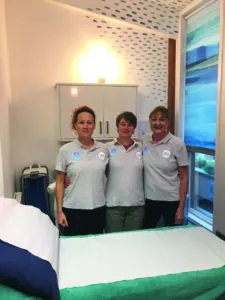
From left to right: Anna Joseph, Josie Darling and Wendy Walker
Acupuncture clinic in a hospice setting
Caroline and Josie established an acupuncture clinic at a hospice a decade ago, offering support to both patients and their caregivers. Since then, Caroline has observed significant improvements in patient wellbeing, supported by feedback from patients confirming that acupuncture helps reduce physical symptoms and provides a therapeutic, hands-on approach to care. Through additional training and regular peer supervision, Caroline’s team has refined its practice to enhance outcomes.
The clinic has provided outpatient services, supported by the hospice’s resources. During the Covid-19 pandemic, the team adapted by performing home visits when it was safe to do so, ensuring continued access for patients who might otherwise have gone without care. Caroline highlights the unique role acupuncture plays as an adjunct to conventional treatment, often helping to reduce patients’ “pill burden” and enhance their quality of life.
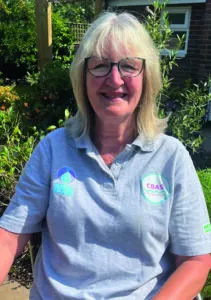
Caroline Clews
Benefits and challenges of acupuncture in healthcare
We believe the combined role of nurse and acupuncturist offers our oncology patients a unique, holistic approach and our experiences underscore the many benefits of integrating acupuncture into healthcare. The therapy provides symptom relief, helps reduce reliance on medications and their associated side-effects, and fosters strong therapeutic relationships between nurses and patients. Patients have also reported improved pain management, reduced anxiety, and a stronger sense of wellbeing – all of which contribute to better quality of life and greater adherence to treatment regimens. Feedback collected from oncology patients after six acupuncture sessions is shown in Box 1.
Box 1. Oncology patient feedback
“It has definitely helped with my hot flushes and joint pains related to my hormonal treatment” (Macmillan centre)
“Useful physically and emotionally” (Macmillan centre)
“The treatment has significantly reduced the number of hot flushes I am experiencing and has improved my sleep, both which were badly needed. I had radiotherapy in the middle of the acupuncture and the following weeks really made a big difference mentally recovering from that experience. My anxiety eased and I felt I had time for myself” (CBAS)
“My joint pains have reduced, and I’m really pleased to have been shown how to needle myself at home” (CBAS)
“I came to my first appointment feeling sorry for myself, having suffered side-effects from cancer and all the drugs I have been put on. I was sceptical about acupuncture, but my symptoms have been so bad for so long and I was keen to try anything. The nurses made me feel at ease and [were] helpful with advice. I found the acupuncture relaxing and [it] helped my sleep and my peripheral neuropathy” (Hospice setting)
“It was so beneficial to have a space in which to receive positive support and focus on energy levels and muscle pain. The sessions allowed me time to relax, let go of the stress, and try a new approach to managing my symptoms. Highly recommend” (Community)
CBAS = Community-based Acupuncture Service
Although acupuncture has great potential for symptom management in healthcare, we have all encountered challenges, particularly related to time, space and capacity. At a time when healthcare services are stretched, valuable complementary services, such as acupuncture, are often the first to be cut. Financial constraints pose a key barrier to service development. To address this, we pursued partnerships with charitable organisations to enable us to support the introduction and growth of these services.
Health professionals often lack protected time to deliver acupuncture, and additional time outside of work hours may be needed to set up and maintain such a service. We found that access to adequate administrative support, including assistance with patient scheduling and consent forms, was critical for ensuring service continuity.
Recommendations for practice
Based on our experience, we suggest several practical recommendations for health professionals who are interested in incorporating acupuncture into their practice:
- Complete risk assessments – a thorough risk assessment for each service helps mitigate potential complications and ensures that acupuncture is administered safely;
- Develop policies and obtain insurance – acupuncture policies, informed by resources from other healthcare providers, should guide practice. Nurses should also secure appropriate insurance, such as that available to BMAS members;
- Establish supportive partnerships – partnering with charities and integrated health organisations can provide essential resources, including treatment spaces, funding and volunteer assistance;
- Secure administrative support – reliable administrative support is vital for handling patient bookings and consent management, thereby enabling clinicians to focus on care delivery;
- Engage in continuous professional development – ongoing education through providers such as BMAS, plus events and networking with other acupuncturists, supports skill refinement and knowledge sharing.
Conclusion
We hope that, by sharing insights into our services, we have highlighted the positive impact of acupuncture on patient care in NHS and hospice settings. Acupuncture has been well received by patients, offers effective symptom management, and strengthens the nurse–client relationship, creating a valuable holistic care experience. With appropriate training, administrative support and organisational backing, acupuncture has the potential to become a widely accessible and affordable adjunct to traditional healthcare. We encourage more colleagues to pursue training and to explore partnerships that can help expand this valuable service in their communities.
Key points
- Western medical acupuncture can help to alleviate the physical and emotional side-effects of cancer
- With appropriate training, nurses can offer acupuncture as an adjunct to their current practice
- Multibed acupuncture clinics are cost-effective and improve patient access to the therapy
- Administrative support is vital to maintain nurse-led acupuncture services
Association of Community and Multibed Acupuncture Clinics (no date) Affordable and accessible acupuncture for every town and city. acmac.org.uk (accessed 8 July 2025).
Cummings M (no date) Safe needling over the thorax. www.medical-acupuncture.co.uk (accessed 8 July 2025).
Cummings M (2025) Evidence for acupuncture. medical-acupuncture.co.uk, January (accessed 8 July 2025).
Filshie J et al (2016) Medical Acupuncture: A Western Scientific Approach. Elsevier.
Kissane DW et al (2017) Oxford Text book of Communication in Oncology and Palliative Care. Oxford University Press.
White A (2018) Western medical acupuncture: a definition. Acupuncture in Medicine; 27: 1, 33-35.
Wilcock A et al (2022) Palliative Care Formulary. Pharmaceutical Press.
Help Nursing Times improve
Help us better understand how you use our clinical articles, what you think about them and how you would improve them. Please complete our short survey.
link