


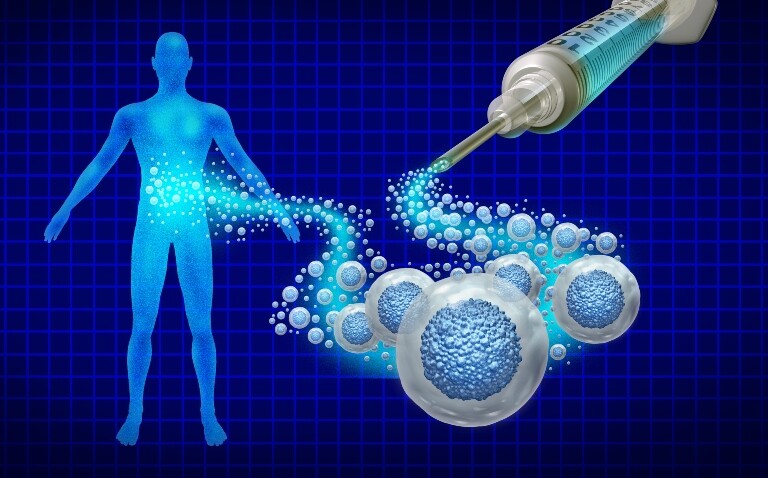
Umbilical cord-derived mesenchymal stromal cells (UC-MSCs) could provide clinical benefit and restore responsiveness to previously failed biologic therapies in patients with severe, refractory psoriasis, a new case series suggests.
Cytokine-targeted biologics have transformed the management of psoriasis, yet an increasing number of patients are developing resistance to these agents.
Research led by the St John’s Institute of Dermatology at Guy’s and St Thomas’ NHS Foundation Trust and King’s College London, UK, has explored the potential of UC-MSCs as a novel therapeutic option for patients with refractory psoriasis who no longer respond to biologic therapy.
Three adult women aged 45–47 years with longstanding, severe plaque psoriasis, each having failed between four and six biologics received two intravenous infusions of UC-MSCs (1.96–3.00 x 10⁶ cells/kg) one week apart.
Two participants received UC-MSCs as monotherapy, while one received concurrent etanercept. They were monitored for over two years, and detailed clinical and immunological assessments were conducted throughout.
Renewed responses to biologics
UC-MSCs were well tolerated, with the patients experiencing only mild, transient reactions, such as nausea or infusion-site irritation. Clinical improvement varied: one patient achieved an 87% reduction in the Psoriasis Area and Severity Index (PASI) within four weeks, while the others experienced renewed responses to biologics that had previously failed, maintaining PASI 0–2 for more than two years.
Immunophenotyping revealed increased frequencies of regulatory T cells and skin-homing/recirculating T cells, alongside a reduction in inflammatory monocytes, changes that correlated with clinical improvement.
The researchers acknowledged several limitations, including a small sample size of patients with refractory psoriasis, heterogeneity in prior therapies and confounding factors such as concurrent biologic use and variable treatment timelines. The compassionate-use protocol also restricted dosing to two infusions per patient, which limited dose optimisation.
Future directions for refractory psoriasis
The findings suggest that UC-MSCs may help to ‘reset’ immune responsiveness in refractory psoriasis, potentially enhancing the effectiveness of subsequent biologic treatments.
Larger randomised controlled trials are required to validate these early findings, the researchers said, adding that future research should focus on determining optimal tissue sources, dosing regimens and long-term safety profiles of MSC-based therapies.
They also emphasised the importance of identifying predictive biomarkers of response and exploring the use of MSC therapy earlier in the treatment journeys of patients with psoriasis, prior to the occurrence of multiple biologic failures.
Reference
Lwin SM et al. Mesenchymal stromal cells as rescue therapy in biologic-refractory psoriasis: insights from a case study. Front Immunol 2025;16:1656724.
link