Which path is right for you?
As the arts continue to reshape health care, more people are drawn to careers that blend creative expression with healing. A World Health Organization report highlighted evidence from over 3,000 studies demonstrating the arts’ role in promoting health, preventing illness and supporting the treatment of conditions across all stages of life.
Two fields that stand at the intersection of art and healing are music therapy and arts in health. But what sets them apart, and how do you decide which path is right for you? This guide explores the unique qualities of each field, offering a deeper understanding of their roles, benefits and career opportunities.
“The arts help us understand our own humanity and are extremely important when needing to connect with others,” says Dr. Sharon Boyle, Director of Arts in Health and Associate Professor of Music Therapy. “There is a need for both music therapists and arts in health professionals to meet a range of needs in healthcare and communities.”
What is music therapy?
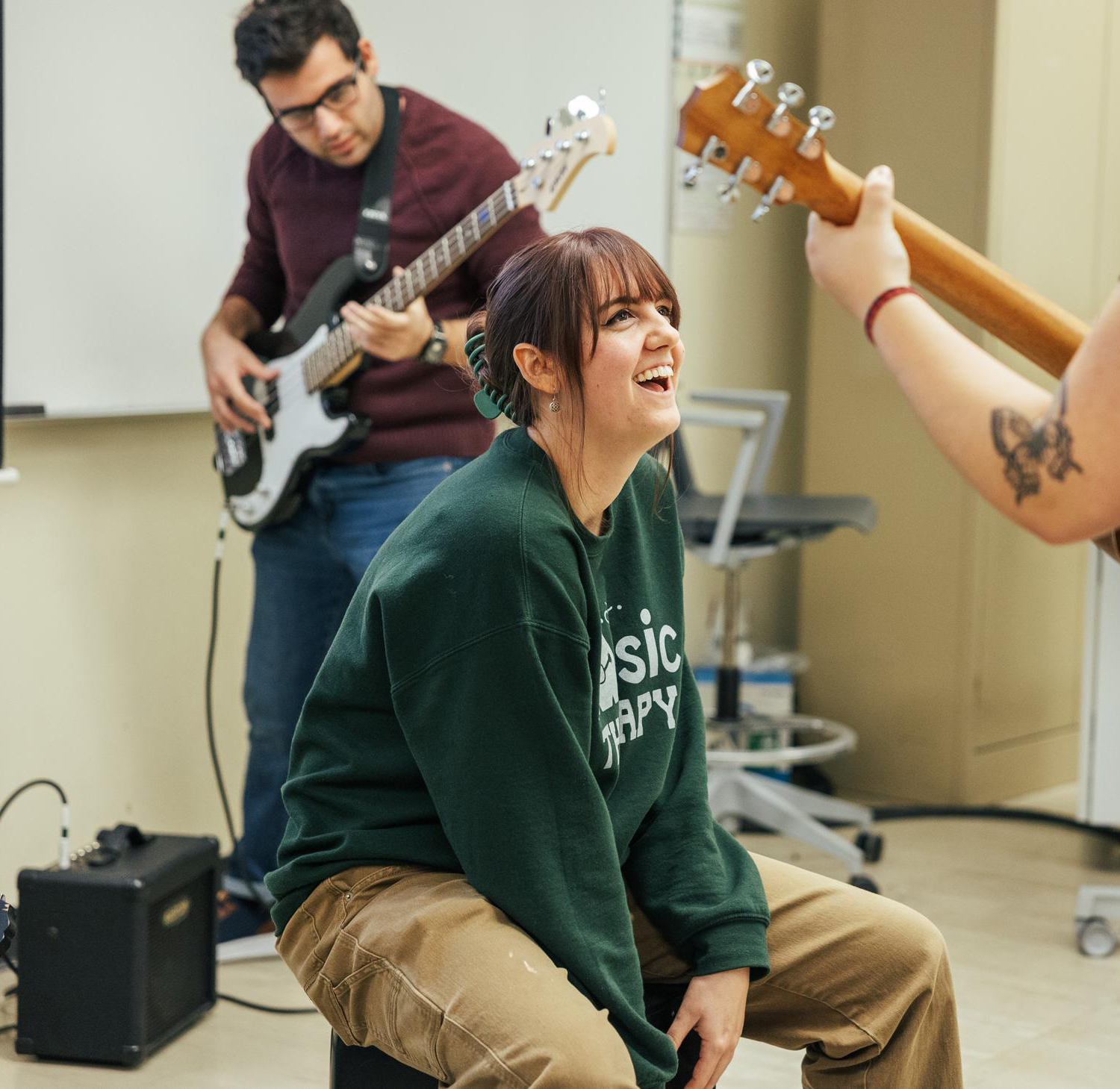
Music therapy, as defined by the American Music Therapy Association (AMTA), is the “clinical & evidence-based use of music interventions to accomplish individualized goals within a therapeutic relationship by a credentialed professional.” Music therapy is a creative arts therapy, alongside art therapy, dance-movement therapy and drama therapy.
“Music therapists have extensive training and education in how to use music to provide clinical care for a range of needs such as pain management, emotional support, and rehabilitative care through specific therapeutic processes,” says Boyle.
As a music therapist, you might work with autistic children or adults, seniors in memory care, veterans coping with PTSD, or oncology patients coping with anxiety during treatment. Your role is to harness the elements of music—melody, rhythm, harmony—to create a safe space for emotional expression, physical rehabilitation, social connection or cognitive improvement.
Music therapists are trained to assess clients, design personalized interventions, and help them work toward specific outcomes, such as reducing anxiety, improving communication or managing pain. The work is deeply personal and varies widely, from creating a music-based relaxation experience in a hospital setting to using improvisation techniques to help a nonverbal child express themselves.
What is arts in health?
“Arts in health professionals are emerging to paticipate in providing a continuum of care throughout medical settings and within communities,” says Boyle.
Arts in health is a developing field that integrates the arts into medical, and public health settings to enhance overall well-being and create supportive, healing environments. Unlike creative arts therapies, which involve clinically trained professionals, arts in health professionals use a broader range of arts-based interventions that promote health without engaging in clinical treatment. Their work often aims to reduce the stigma of health care, improve quality of life and increase access to health resources through artistic engagement.
Arts in health professionals collaborate with health care providers to develop programs that use various art forms, such as visual arts, dance, music or theater, to create welcoming environments, foster connection and enhance the patient experience. They focus on designing interventions based on research and ethical practice, contributing to a continuum of care that extends beyond traditional medical treatments.
Although arts in health does not engage clinically, its evolving professionalization will benefit from increased educational programs such as OHIO’s Master of Applied Arts in Health program.
link